The Golden Fiber: A Legacy of Quality at Rainbow Jute Mills Limited
Bangladesh and Jute share a history as deep and enduring as the delta itself. Known globally as the "Golden Fiber," jute stood as the backbone of our economy during the post-independence era of the 1970s. Long before that, from the 1940s through the 1980s, Bangladeshi jute was the world’s primary packaging material, essential for the global transport of food grains.
The fertile, silt-rich soil of our riverine landscape provides the perfect conditions for growing the finest quality long-staple jute, cementing Bangladesh's position as the undisputed heart of the industry.
Crafting a Greener World
The Silt of the Delta
Our material strength originates in the nutrient-rich river deltas of Bangladesh, where seasonal flooding deposits natural minerals that nourish the world's strongest long-staple golden fiber.
First Loom
Mill Integration
Global Scale
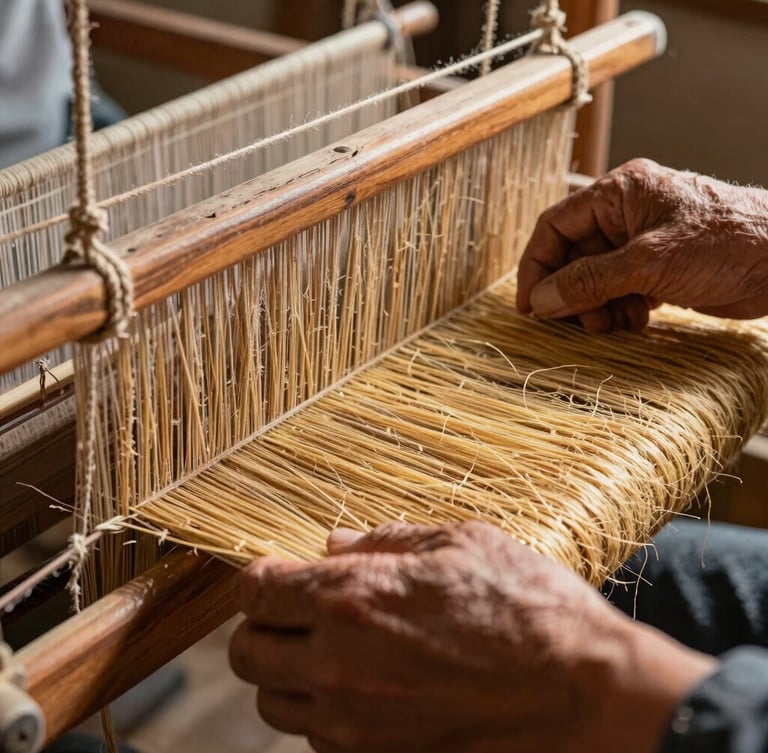
We began as a family-run weaving shed with twenty traditional wooden looms, sourcing raw fiber directly from local delta farmers.
We consolidated our agricultural supply lines and constructed our first high-capacity processing mill to control quality from raw stalk to yarn.
Today we operate four integrated mills, supplying millions of fully compostable packaging units annually to international retail networks.
Raw Refinement
We bypass chemical additives entirely, relying on pure mechanical processing to spin and weave high-spec jute textiles that effortlessly match rigid industrial packaging requirements.
From Stalk to Hem
Our vertically integrated supply chain ensures absolute material control. We harvest, retting, spin, and sew within a fifty-mile radius, eliminating carbon overhead and synthetic waste completely.